The Illusion of Transparency: We overestimate how visible our thoughts and emotions are to others. When nervous, we think everyone notices. They usually don't. This affects how we communicate, lead, and even interact with AI.
Article: The Illusion of Transparency
Whenever you feel nervous during a presentation and think everyone can tell, remember this cognitive bias: illusion of transparency.
We oftentimes overestimate how visible our thoughts and emotions are to others.
Imagine someone pitching an idea. Their minds race with doubt. They're convinced everyone sees their nervousness. They interpret distracted looks as proof that people have tuned out.
In reality, people see them as confident. At the break, someone compliments their presentation.
This happens everywhere. In relationships, we assume our partner knows how we feel without us saying it. In an organization, leaders assume their intentions are clear to their teams.
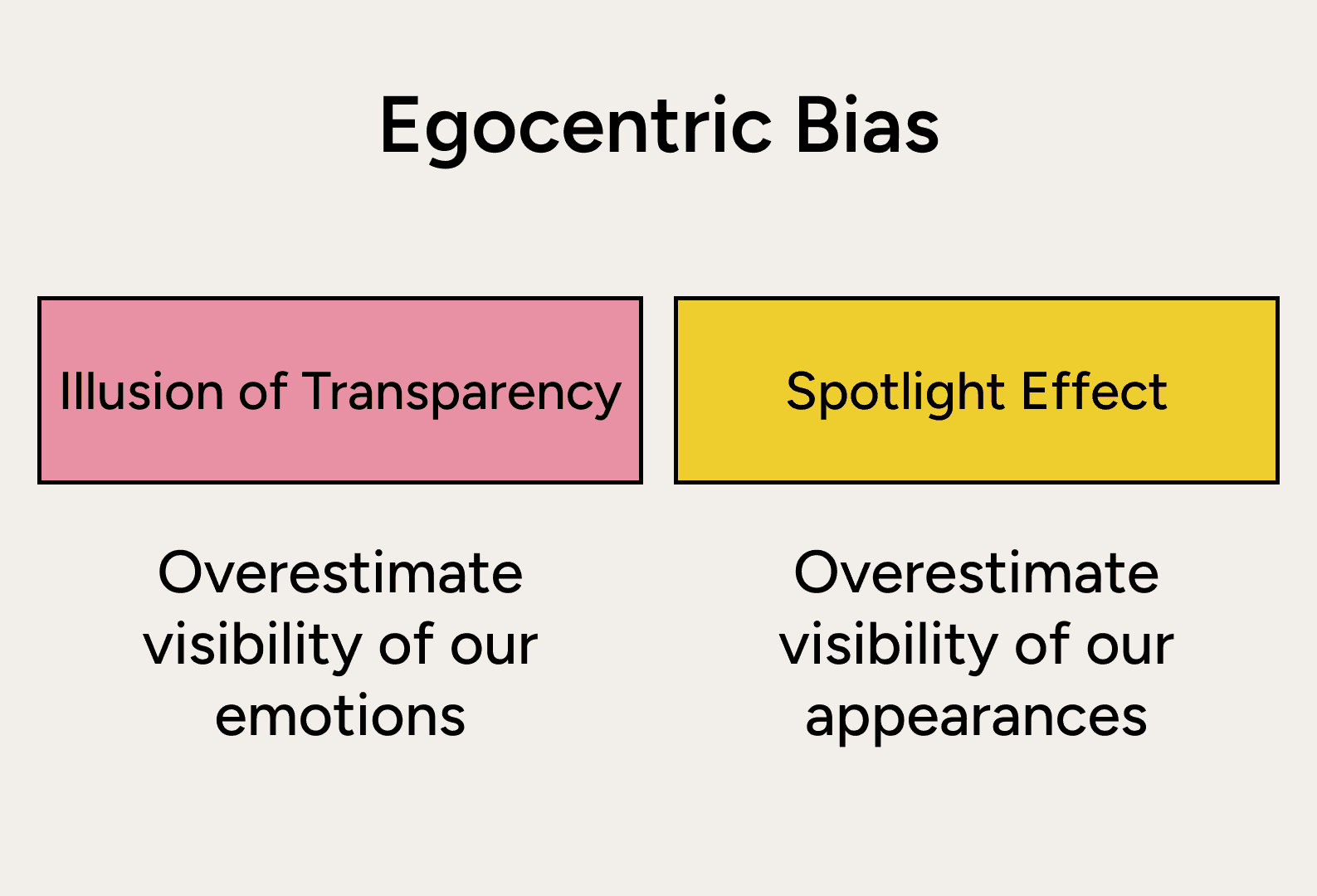
The illusion of transparency relates to the spotlight effect, in which we overestimate how much others notice our appearance. The illusion of transparency is the overestimation of the visibility of internal states.
Both stem from egocentric bias. We naturally anchor to our own perspectives. It's more efficient to assume others' perspectives align with ours than to understand what they actually are.
Why does this happen? We spend so much time analyzing our internal states that we struggle to shift focus to others' perspectives.
This reminds me of three things:
- "Nothing in life is as important as you think it is when you are thinking about it."
- When we talk to AI, we get annoyed when it gives an answer that doesn't match what we meant, even though our prompt was awfully vague. We are expecting it to read our minds.
- When we talk to others, we often want to feel understood, even before we fully understand ourselves.