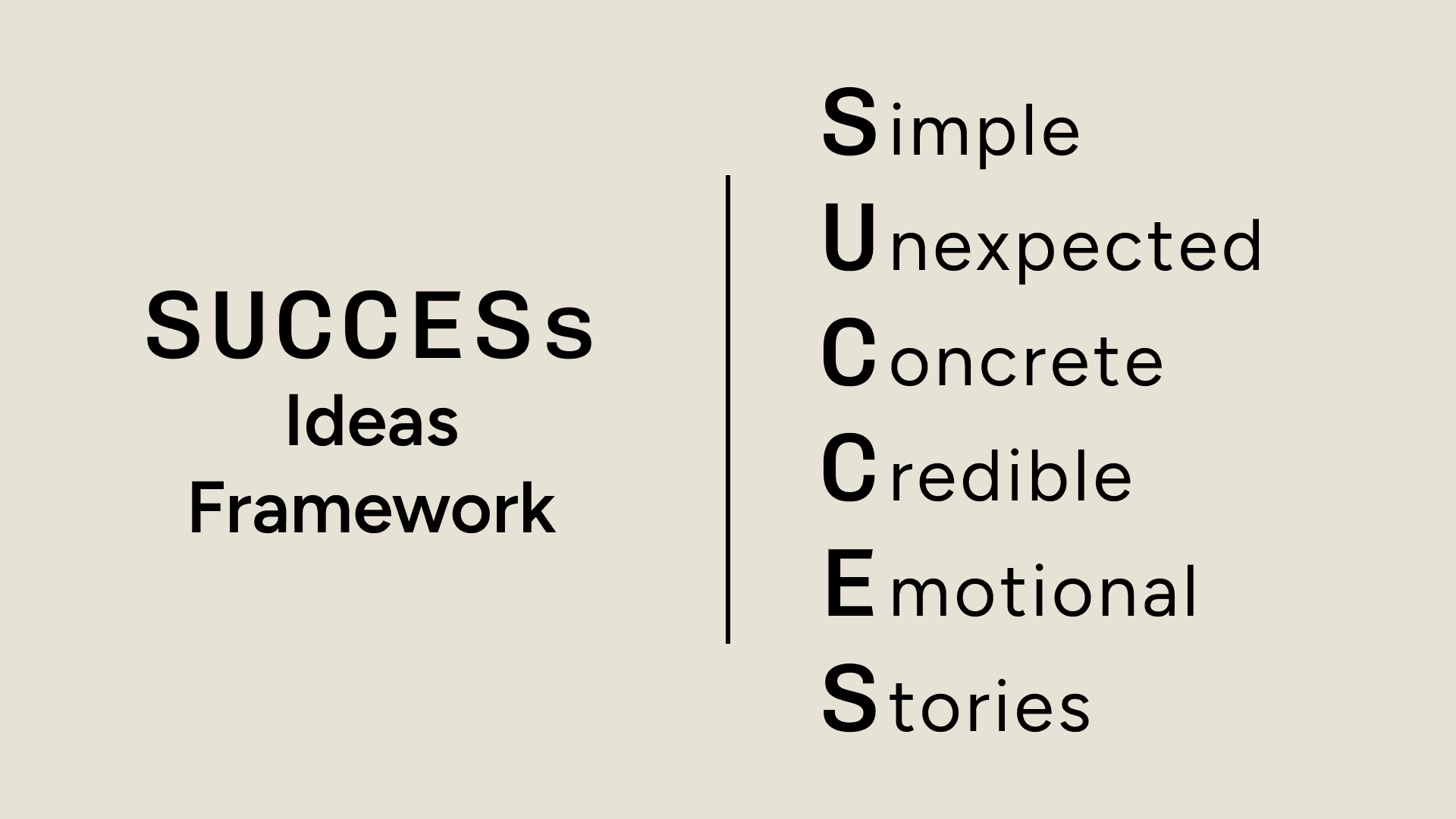
The SUCCESs framework: Ideas stick when they're Simple, Unexpected, Concrete, Credible, Emotional, and wrapped in Stories.
Book: Made to Stick
What makes some ideas survive while others die? Chip and Dan Heath proposed a six-trait framework of ideas that people remember. They call it SUCCESs:
- Simple. Say one thing clearly. Find the core, not the summary. Most ideas fail because they try to say everything. Sticky ideas say one thing extremely clearly. The audience needs to remember only one sentence tomorrow.
- Unexpected. Break predictions to grab attention. Go beyond shock with surprise plus insight.
- Concrete. Abstract ideas vanish. Concrete ones stick. Replace "high performance culture" with "Every meeting ends with one decision, one owner, one deadline."
- Credible. Help people believe without authority. Credibility doesn't always require experts. Use specific details or let people test it themselves. "Try it for seven days and see."
- Emotional. Make people care before they think. People act when they feel. Logic justifies the action afterward. Tie ideas to identity. Show consequences to real people. "This policy decides whether Maria can afford insulin" is better than "Thousands are affected."
- Stories. They're mental flight simulators. Stories prepare people to act. Show cause and effect and model action. Instead of listing principles of customer service, tell a story about an employee who bent the rules and what happened next.
The Heath brothers showed that smart ideas fail because they're poorly packaged, while average ideas win because they're well structured.
Don't treat stickiness as a talent problem. Treat it as a design problem.
Related: Four Elements of Storytelling