The Worse-Than-Average Effect: In difficult tasks, we think we're worse than everyone else. But that difficulty is usually universal, not unique to us.
Article: The Worse-Than-Average Effect
Have you ever felt like everyone else was better at something, even when evidence said otherwise?
That's the worst-than-average effect. We underestimate our abilities compared to others, especially in areas where we lack confidence. In other words, when a task is difficult, we assume we are worse than average, even if the task might be challenging for everyone.
It's the opposite of the better-than-average effect, where we overestimate our abilities.
Easy tasks make us overconfident. Most people think they're better-than-average drivers. Challenging tasks make us underestimate ourselves. Learning a new language? We feel behind.
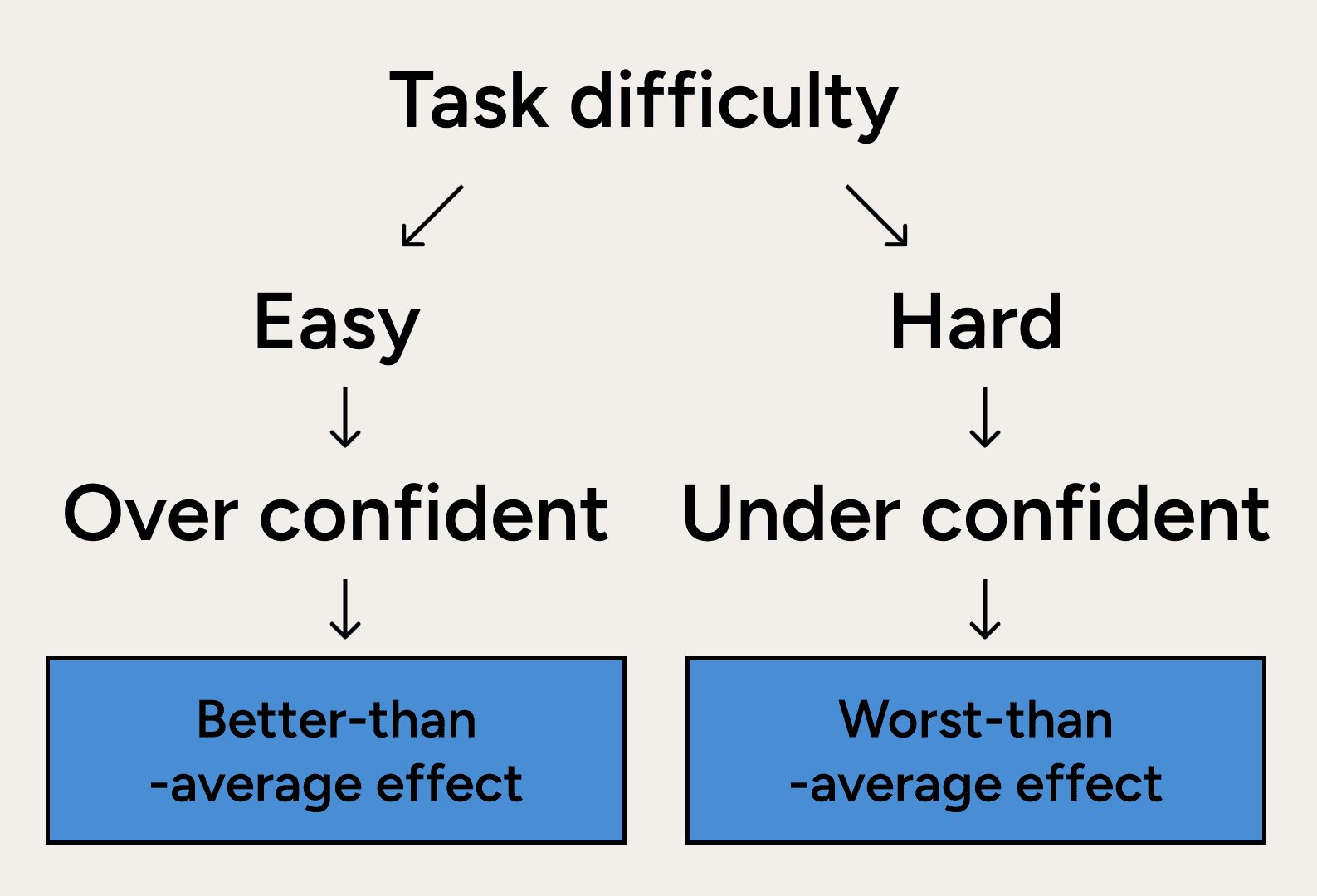
Difficulty acts as an anchor that changes our judgment regardless of low or high self-esteem.
This explains impostor syndrome. High achievers in challenging fields aren't incompetent. They're experiencing the worse-than-average effect.